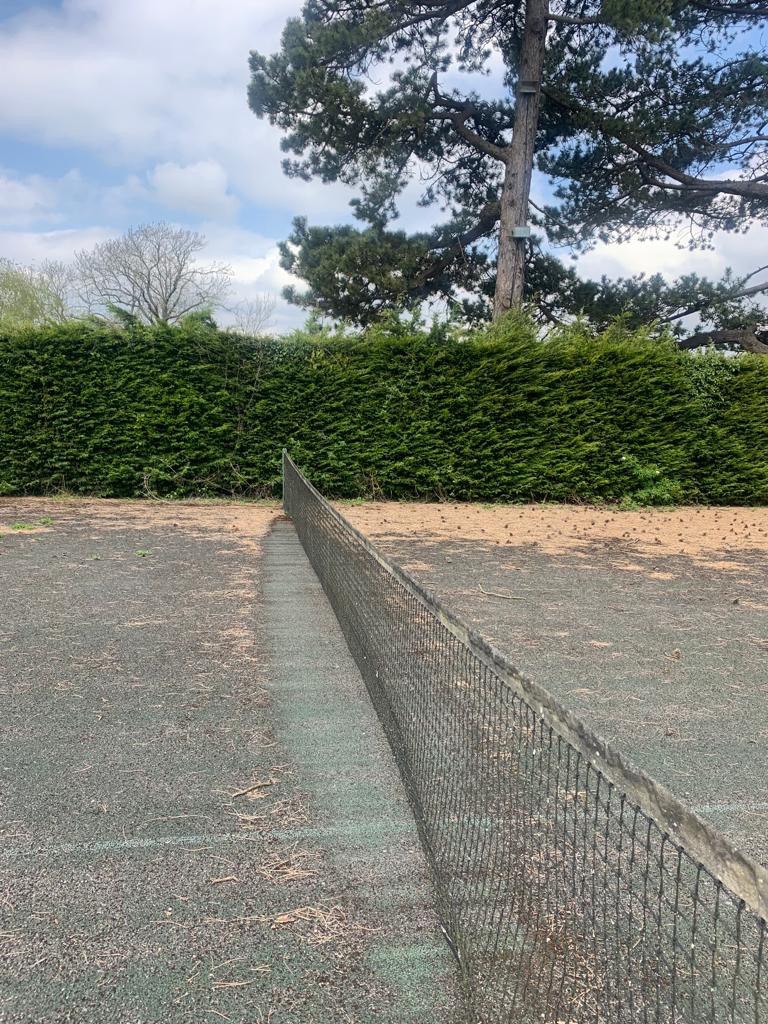
A new tennis court is more than a large area covered with a suitable playing surface. Its long-term performance depends on what lies beneath that surface, how accurately the court is constructed, how effectively water is managed and how carefully each stage of installation is completed. Problems with any of these elements can affect the quality of play and the condition of the court over time.
For property owners, schools, clubs and other facilities in Dorset, UK, professional tennis court installation provides the technical knowledge and structured construction process needed to create a dependable playing environment. From initial site preparation through to the finished surface, attention to detail makes a considerable difference.
A Tennis Court Needs the Right Foundation
The quality of a tennis court begins below the visible playing surface.
Before construction starts, the proposed area needs to be properly assessed and prepared. The ground must provide a suitable foundation capable of supporting the layers above without unwanted movement.
Professional preparation may involve careful attention to:
- Existing ground conditions
- Excavation requirements
- Formation levels
- Sub-base construction
- Compaction
- Drainage
- Finished court levels
If the foundation is poorly prepared, problems can eventually become visible at surface level regardless of the quality of the final court finish.
Accurate Levels Are Essential
A tennis court needs to appear level while still allowing water to drain effectively.
Achieving this requires accurate construction. Excessive variations across the court can affect both play and drainage, while poorly formed falls may encourage water to remain on the surface after rainfall.
Professional contractors understand how to establish appropriate levels throughout the construction process so that the finished court provides a consistent playing area while managing surface water effectively.
Drainage Must Be Considered From the Beginning
Water management is one of the most important elements of outdoor tennis court construction.
A court that regularly retains water can become less practical to use and may experience premature deterioration. Drainage therefore needs to be incorporated into the design rather than treated as an afterthought once the surface has been installed.
A professional assessment considers how rainfall will move across and away from the court, taking account of the site and the intended construction.
Effective drainage helps:
- Reduce standing water
- Support consistent court use
- Protect the construction beneath the surface
- Limit prolonged moisture exposure
- Maintain the condition of the playing area
Surface Consistency Affects How the Court Plays
Tennis depends heavily on predictable interaction between the ball and the playing surface.
Uneven areas, depressions or inconsistent finishing can influence ball bounce and player movement. Even relatively small irregularities can become noticeable during regular play.
Professional installation focuses on creating a uniform surface across the entire playing area. Correct preparation beneath the final finish is just as important as the surface itself because imperfections in lower layers can eventually affect what players experience above.
Correct Court Dimensions Require Accuracy
Tennis court construction requires careful setting out.
The playing area, surrounding run-off space and associated features need to be considered before construction begins. Accurate measurement ensures that the finished court feels properly proportioned and functions as intended.
Professional contractors establish the layout before major construction takes place, helping avoid alignment or positioning problems later in the project.
The Sub-Base Supports Long-Term Performance
The sub-base forms an important structural layer within many tennis court constructions.
Its purpose is to create stable support beneath the playing surface and distribute loads appropriately. Correct material placement and compaction are therefore essential.
An inadequately prepared sub-base can contribute to:
- Surface movement
- Localised settlement
- Uneven areas
- Cracking
- Drainage difficulties
Because these problems originate below the finished surface, correcting them afterwards can require considerably more extensive work than preparing the foundation properly in the first place.
Professional Installation Helps Prevent Premature Surface Problems
Many visible court defects can be traced back to decisions made during construction.
For example, cracking may not simply be a surface issue. It can result from movement beneath the court. Similarly, areas that retain water may reflect incorrect levels or unsuitable drainage rather than a problem with the final surface alone.
Professional installation aims to prevent these issues by considering the complete court construction rather than concentrating only on its appearance when newly completed.
Different Sites Require Different Approaches
No two tennis court sites are exactly the same.
Ground conditions, surrounding levels, access, existing surfaces and drainage characteristics can all influence how a court should be constructed.
A professional contractor can assess these factors before deciding how the project should proceed.
This site-specific approach is important because using the same construction method without considering local conditions can compromise the finished result.
The Playing Surface Needs Skilled Installation
Once the structural preparation has been completed, the final playing surface needs equally careful attention.
The quality of this stage affects:
- Ball response
- Player movement
- Surface consistency
- Court appearance
- Ongoing maintenance requirements
Correct application and finishing help ensure that the playing characteristics remain consistent across the court rather than varying from one section to another.
Line Markings Need to Be Precise
Court markings may appear to be a relatively simple final stage, but accuracy matters.
Lines need to be positioned correctly, remain visually clear and integrate neatly with the playing surface. Poorly positioned or uneven markings can make an otherwise well-constructed court appear unfinished.
Professional installation ensures this final detail receives the same level of attention as the underlying construction.
Surrounding Features Should Be Considered as Part of the Project
A tennis court does not exist independently from its surroundings.
Depending on the site, the overall installation may need to consider access, perimeter areas, fencing and other associated features. Planning these elements alongside the court construction can create a more practical and coherent finished facility.
It also ensures that surrounding features do not interfere with drainage, court access or the playing environment.
Good Construction Makes Future Maintenance Easier
Every outdoor tennis court requires ongoing care, but a properly constructed court provides a much stronger starting point.
When drainage works effectively, levels remain consistent and the underlying construction is stable, routine maintenance can concentrate on preserving the playing surface rather than continually responding to construction-related defects.
Professional installation therefore supports not only the initial quality of the court but also its future manageability.
Why Experience Matters in Tennis Court Construction
Building a tennis court requires several different areas of expertise to work together. Ground preparation, drainage, structural layers, surface installation and accurate finishing all influence the final result.
A contractor must understand how decisions made during one stage will affect the stages that follow.
At Tennis Court Construction Dorset, we provide professional tennis court construction services throughout Dorset, UK. We approach each project with careful attention to site conditions, preparation, drainage and the quality of the finished playing surface.
The objective is not simply to create a court that looks impressive when completed, but one that provides dependable and consistent performance through correct construction.
What Should You Expect From Professional Installation?
A professionally managed tennis court project should follow a logical sequence rather than treating the playing surface as the only important element.
The process should focus on:
- Understanding the proposed site
- Preparing the ground correctly
- Establishing accurate levels
- Creating suitable structural support
- Incorporating effective drainage
- Installing the chosen playing surface carefully
- Completing accurate markings and finishing details
Each stage contributes to the performance of the completed court.
Conclusion
Professional installation is important for a new tennis court because the quality of the finished playing surface depends on everything beneath and around it. Ground preparation, sub-base construction, drainage, accurate levels and careful surface installation all need to work together.
Shortcuts during the early stages may not always be immediately visible, but they can eventually contribute to unevenness, standing water, cracking and inconsistent playing conditions.
For those planning a new tennis court in Dorset, UK, Tennis Court Construction Dorset provides professional construction services focused on creating a stable, practical and well-finished playing environment. If you are considering a new court, arranging a professional site assessment is a sensible first step towards ensuring the installation is designed and constructed correctly from the ground up.
Call us on: 01202 125699
Click here to find out more about Tennis Court Construction Dorset
Click here to complete our contact form and see how we can help with your tennis needs.