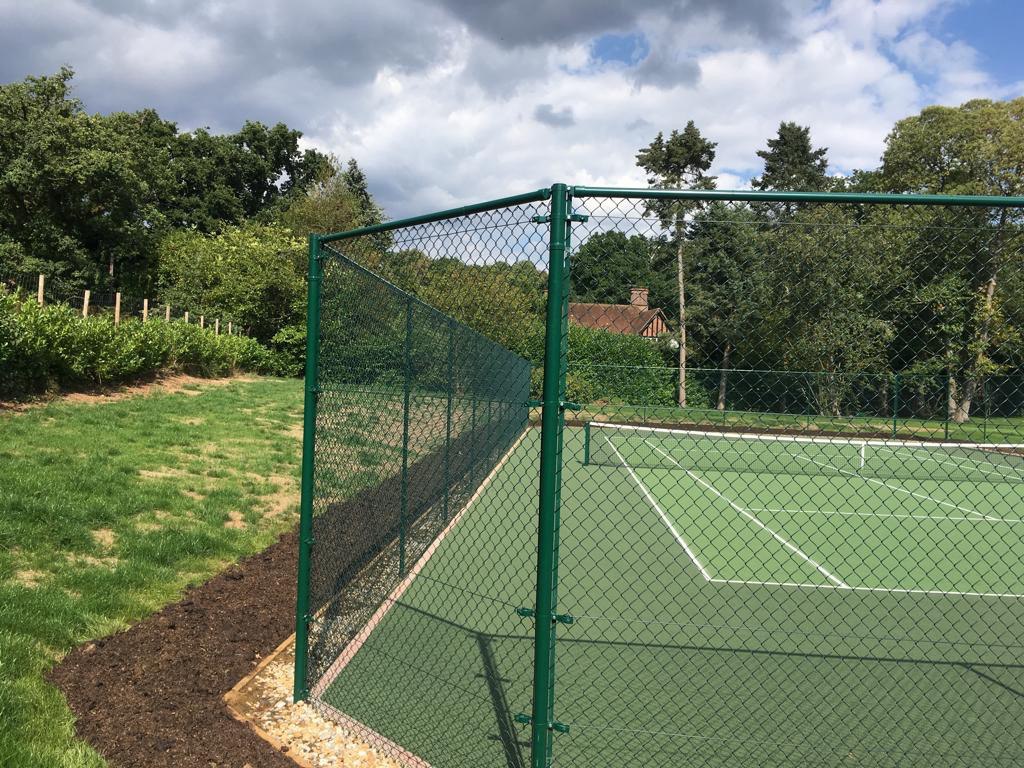
Building a new tennis court is an excellent way to create a dedicated space for sport, exercise and recreation. Whether the court is intended for private use, a school, a sports club or a commercial facility, careful planning is essential to achieving a surface that is safe, durable and enjoyable to play on.
A successful tennis court construction project involves more than choosing a playing surface. Ground conditions, drainage, dimensions, orientation and ongoing maintenance all influence the finished facility. For anyone planning a new court in Dorset, understanding these considerations before work begins can help ensure the project meets its intended purpose.
Assessing the Site and Available Space
The first step in planning a tennis court is assessing the proposed location. A standard doubles tennis court measures 23.77 metres long and 10.97 metres wide, but additional space is needed around the playing area to provide suitable run-off zones and safe movement.
The available land should be assessed to establish whether it can accommodate the court and its surrounding space. The shape of the site, existing landscaping, access points and nearby structures may all influence the design.
Ground conditions are equally important. The site should be examined for uneven ground, soft areas and potential drainage difficulties. Identifying these issues early allows the construction approach to be planned appropriately and helps reduce the risk of problems developing after installation.
Choosing the Right Tennis Court Surface
The playing surface affects how a tennis court looks, feels and performs. Different materials offer varying levels of ball bounce, player movement, maintenance requirements and weather suitability.
Common options include:
- Macadam courts: A hard surface offering consistent play and relatively straightforward maintenance when properly constructed.
- Synthetic grass courts: Designed to provide a softer playing experience with a grass-like appearance.
- Artificial clay surfaces: Offer characteristics associated with traditional clay courts, with specific maintenance requirements depending on the system used.
- Acrylic sports surfaces: Provide a smooth, hard-wearing finish with scope for different playing characteristics and colour combinations.
The most suitable option depends on who will use the court, how frequently it will be played on and the level of maintenance that can be provided. A professional assessment can help match the surface to the intended use.
Planning Effective Drainage
Drainage is one of the most important aspects of new tennis court construction. Rainwater that cannot drain away effectively may leave the surface unusable, contribute to deterioration and affect the stability of the court structure.
The ground should be assessed before construction to understand how water naturally moves across the site. The design may need suitable gradients, drainage channels and an appropriate sub-base to manage water effectively.
In Dorset, where courts must cope with changing weather conditions throughout the year, proper drainage helps maintain usability and protect the surface. It should be considered from the beginning rather than treated as an additional feature once construction is under way.
Considering Court Orientation and Surroundings
Court orientation can influence playing comfort, particularly when the sun is low in the sky. A north–south alignment is generally preferred where the site allows, as it can help reduce players looking directly into the sun during play.
The surrounding environment should also be considered. Trees, nearby buildings and exposed positions may affect sunlight, shade, wind and the amount of debris reaching the court.
Planning the position carefully can create a more comfortable playing environment and reduce potential maintenance issues. It is also worth considering fencing, access gates and any additional facilities required around the court.
Preparing the Ground and Sub-Base
A durable tennis court depends on a stable foundation. Before the playing surface is installed, the ground must be prepared to provide suitable support and prevent movement.
Construction typically involves clearing the site, establishing the required levels and installing an appropriate sub-base. The exact specification depends on the ground conditions and the selected court surface.
Insufficient preparation can lead to uneven areas, cracking, poor drainage and premature surface deterioration. Taking care during this stage is essential because problems beneath the playing surface can be difficult to resolve once construction is complete.
Lighting, Fencing and Additional Features
A new tennis court may benefit from features that improve its practicality and usability. Fencing helps keep balls within the playing area and provides a defined boundary, while suitable gates allow convenient access.
Lighting may also be considered where the court is intended for use during darker periods. It should be planned as part of the overall design so that the positioning and coverage are appropriate for the playing area.
Other features may include seating, storage for equipment and landscaping around the court. Considering these requirements early helps create a facility that works well for its users.
Why Professional Tennis Court Construction Matters
Every site presents different construction requirements. Professional planning helps ensure that the dimensions, ground preparation, drainage and playing surface are appropriate for the location and intended use.
An experienced tennis court construction specialist can assess the site, discuss suitable surface options and coordinate the stages of installation. This attention to detail helps create a court that offers consistent playing conditions and long-term performance.
Tennis Court Construction Dorset provides specialist services for new tennis court projects across Dorset, helping clients develop facilities suited to their needs and available space.
Conclusion
Building a new tennis court requires careful consideration of the site, surface type, drainage, orientation and supporting features. Addressing these details before construction begins helps create a practical and durable facility that can be enjoyed for years.
If you are planning a new tennis court in Dorset, professional advice can help you make informed decisions at every stage. Contact Tennis Court Construction Dorset to discuss your project and explore the options for your proposed facility.
Call us on: 01202 125699
Click here to find out more about Tennis Court Construction Dorset
Click here to complete our contact form and see how we can help with your tennis needs.